Financial Education
Most of us never really got a proper financial education. If we were lucky, someone told us to stay out of debt and not spend more than we earn. That’s about it.
On top of that, society pushes us to show off. Drive the fancy car. Buy the big house. Look successful — even if it means going broke trying.
The imposed mindset
Ever watched one of those TV shows where a young couple gets help buying or renovating a house? First comes the budget, how much can we borrow? Then comes the real question — how do we spend every cent of it?
Got 10k left over? Nobody ever suggests taking a slightly smaller mortgage, since that will “only save you a small amount of interest a month“. So why bother? Better to enjoy that extra money now!
Suddenly, they are convincing themselves to install a luxury kitchen or completely gut a bathroom that was remodeled just five years ago, simply because it doesn’t match their exact aesthetic.
Short by 10k? Then it’s time to get creative. Talk to the bank. Ask the family. Because heaven forbid everything isn’t perfect the day you move in. You want to impress your family and friends — right?

What people seem to miss is that those TV shows are incentivized to show you this perfect, consumer-driven world. They want to push you to spend every cent you have or can borrow. Advertisers are lining up to spend their ad dollars to appear in those shows. Why? Because it works for them! That likable presenter, those designers, the interior decorators — their job is ultimately to make you feel comfortable about spending money.
And it doesn’t stop with TV. Open Instagram, TikTok, YouTube or any other social media and you’ll find the same pattern. Influencers showing off their new fancy cars, their dream holidays, their perfect kitchens. What you don’t see is the hefty monthly lease agreement on that car, the credit card debt from that holiday, or the loan that paid for that kitchen. In many cases that shiny car is just a rental used to trick you in what they are selling.
Social media is the most effective advertising machine ever built, and most of us are scrolling through it several hours a day. It forces us to compare our real lives against everyone else’s highlight reels. But remember: you are competing against an illusion. There are always people that do it better in live. Or people that act like they do.
The Financial healthy mindset
The wealthy people (the ones that are not just acting to be wealthy) tend to live within their means. That shiny car will only be bought if it makes sense or can be afforded easily. No need to show off to the neighbors. Instead, they are buying back their time, making their money work for them. Steadily cutting back the hours they need to trade for money.
Let’s say you have a regular job with fixed pay and there is that $50k car you want to buy. Even if you pay that from money saved, consider how many actual hours of your live you had to work to earn that money. If you need to borrow the money – and please… never borrow money for a fancier car than you truly need – the monthly loan and interest payments will translate to many hours working in your job. Would a 10k used car not get you from A to B with almost the same comfort? If so, why overspend on it. Just to catch that jealous look on your neighbor’s face? What if next week they show up with an even nicer car?
This is the trap. It has no finish line, no winners, only losers. There will always be a bigger house, a newer car, a more exotic holiday. The moment you stop chasing the approval of others, you win — because you are finally playing your own game.
A financially healthy mindset isn’t about being cheap, living like you’re impoverished, or hoarding cash like Scrooge McDuck. It is about being intentional. It’s about understanding “opportunity cost”—the idea that every dollar spent on something you don’t need is a dollar that can’t work for your future.
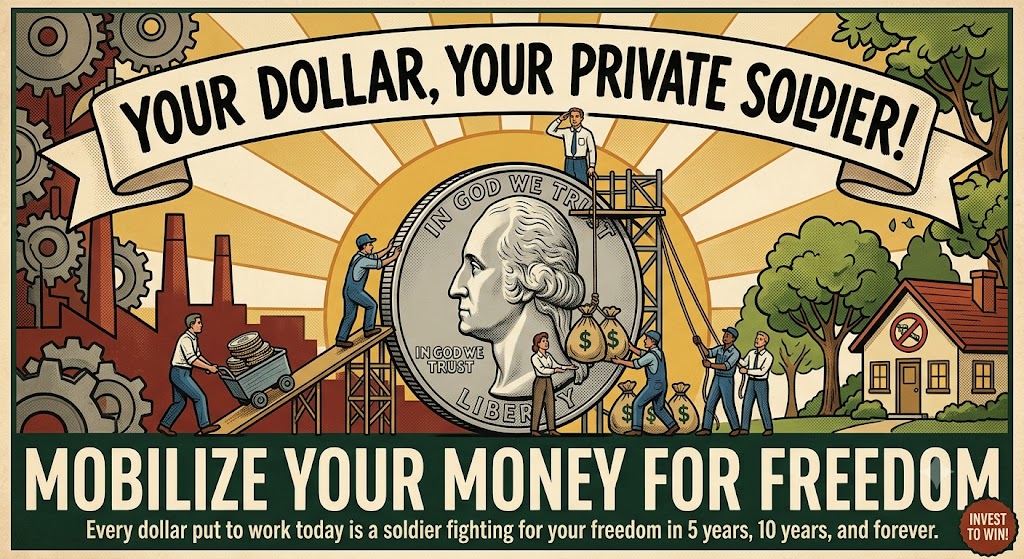
Time is money — that much is widely understood. But the reverse is where the real magic happens: with money, you can buy back your time. Every time you put even a small amount of money to work for you in an investment, you are not just growing a number in a bank account. You are buying a small bit of your freedom.
Don’t just think about what that dollar in your pocket can do for you today. Think about what it can do for you in 5 years, or 10 years, when compound interest lets it work its magic.